Winter Travel in a VW California

Winter Travel in a VW California

Before setting off on a foreign trip during the winter months there are a few things you must research to ensure you are adhering to the particular laws of that country.

If touring there might be several different countries you plan to drive through and each country may have different rules and regulations for different seasons — so it is important to know what is required. A great place to start your research is the AA website; the link below will take you to the page where you can select the country/ies you wish to visit and download a PDF fact sheet for that region.

https://www.theaa.com/motoring_advice/overseas/general_advice.html

From seatbelt law to badge requirements and speed limits, we think the AA has it pretty much covered, and as such this article is more geared towards Volkswagen California owners — however, all campervan, SUV and motorhome owners may still benefit from the information contained here.
snow vanWINTER TYRES

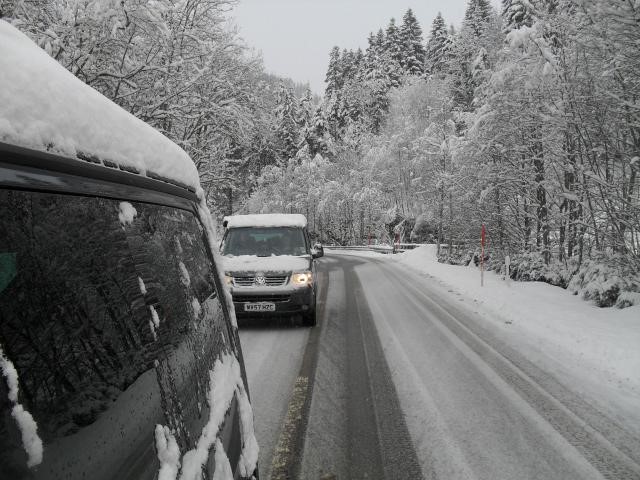
One good piece of advice is to fit winter/snow tyres from November through to February at least, even in if you are in the UK and especially if you are in a remote rural area.

From December 2010 it is has been compulsory in Germany to drive on winter tyres regardless of vehicle nationality so be beware and prepare if you are heading in that direction. If you have the space then it may be worth keeping some winter tyres on sets of steel rims and swap the wheels over in November/December.

Purchasing winter tyres does not need to be an excessively expensive investment, and is one you should consider seriously if you plan to drive your pride and joy in bad weather, let alone to the Alps.

Ask any tyre dealer and they’ll tell you that you don’t need premium tyres to feel the benefit; the sidewall of a winter tyre will be marked with a symbol showing a snowflake or snow-topped mountains, and this is what the German police will be looking for when doing checks!

WHAT’S SO SPECIAL ABOUT WINTER TYRES?

Winter tyres use a rubber compound (high silica content) and tread pattern specifically designed to retain flexibility in low temperatures (below 7°C) and give improved braking/traction performance on snow/ice as well as on wet roads in cold conditions .

If you don’t fit winter tyres then you will need to ensure you have all weather tyres fitted and a decent amount of tread remaining for the countries you are travelling in. Laws in countries can differ on tread depth and at least 3 mm is required in Switzerland and some other countries. Again, check the AA or RAC websites for further information.

https://www.theaa.com/motoring_advice/overseas/snow-chains-winter-tyres.html

Do not forget to check your tyre pressures and if you pack a set of Snow chains practice putting them on. The alloy wheels and tyre sizes on a Volkswagen California can sometimes make getting the right fit difficult (17″ wheels and above). It may be worth noting that specialists such as Campervantastic stock Snow Chains and Snow Socks both for sale and for hire.

snow chainSNOW CHAINS

Snow chains offer excellent grip but are a bit awkward to fit when you are knee deep in snow and slush, and wrapping them around the wheels can be frustrating when you are cold. similar applies for removing them again, so be prepared to get cold and messy.

That is why you should choose the best chains you can find and look for self-tensioning chain for SUV, crossover, commercial vehicles and motorhomes. A good tip is not to leave it too long before fitting the chains; it is easy to think it is not that bad, only to get stuck later on. Vehicles you see passing without snow chains will probably be using snow tyres – so don’t be fooled into thinking you can get away with it; it could be a costly and even fatal mistake!

BREATHALYSERS FOR FRANCE

If you are travelling through France then you are legally required to carry two NF Certified Breathalysers.

These are not expensive and can be purchased in a twin pack by AlcoSense, these are as used by the French Police. The breathalyser must be compliant with French law and are designed to to alert you at the French Drink Drive limit of 0.5% BAC.

SPEED CAMERA ALERTS IN FRANCE

For those intending to travel through France you should be aware that from the 3rd January 2012 a new law in France made it illegal to be warned by Sat Nav & other devices about the location of speed cameras. However most manufactures like TomTom are introducing a 100% compliant Danger Zones service available in a free download for compatible products. If you don’t switch off your speed camera warnings or upgrade your product to the new Danger Zones then you risk a fine of up to €1,500.

SCREEN WASH

A decent screen wash will protect down to -20°C but always check the label as some places sell screen wash that is absolutely useless in sub zero conditions.

CLEANING

Make sure that you get your campervan cleaned, especially if you return from your winter trip and leave it parked for an extended period of time. The road salt used to clear snow and ice can corrode many different parts of your campervan including your brake disks! This could result in pitting, brake noise and potential disk replacement.

FROST PROTECTION

If you are living in the campervan you can leave the fresh water in the tank as long as you keep the temperature above 0°C.

However it is better to drain the water tank when leaving the campervan uninhabited for any length of time – you also need to drain the waste tank and the residue of water from the sink tap otherwise it can freeze and break.

If you leave any food, drink or water bottles in the van in extreme cold then expect everything to be frozen! If you are parked for a long period it is also recommended to chock the wheels and release the handbrake to prevent the brake pads from freezing to the disks.

Be mindful if using the roll-out sun canopy in the extreme cold as it has been known to freeze, thus making it very difficult to roll back in.

For driving advice in winter from the Institute of Advanced Motorists see the bottom of this post and don’t forget to let us know your experiences and tips.

TIPS FOR SKIERS

Storage can be a real issue when packing winter gear, Bulky clothing, skis, snowboards and boots all need their place. There are a variety of equipment and sleeping options available to make your winter trip a success; such as the Ski and Snowboard soft bags from Thule that can attach to your roof bars and removed folded and stored when not being used.

Also, think about hiring or buying your ski gear here in the UK as it can work out very expensive in some European Locations.

SLEEPING

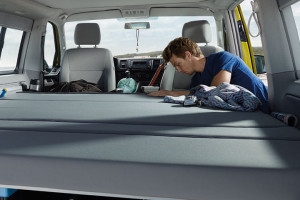
It is warmer in the lower part of the campervan, so here is a tip if you have small children. Put the campervan in first gear (or park) and chock the wheels – you will then be able to drop the handbrake and rotate the front seats to face each other to create a bed for a toddler. You can also get a hammock that fits across the front cab for older children.

The roof bed can be cold at night in winter so something like the Iso Top roof liner (the Iso Top deflects the heat away from the top air vents and acts as a wind breaker). Other options include the Vanorak or Khyam Kamper Cozi.

These all need to be fitted and removed after closing the roof – however, the advantage of the Iso Top Gore lining is that it can be left fitted when lowering the roof but does not offer as much protection in cold weather. Thermal screens (external or internal) are also recommended which fit over the windscreen and can be used in conjunction with insulation hoods.

HEATING AND INSULATION

snow vanThe lower bed area is really toasty – the heating system is amazing and can be used in temps of -18°C and lower; it can be left on through the night without an electrical hook-up and is fuelled by the diesel tank.

You may even get few nights or more if you’re careful with the energy and turn off the fridge etc to conserve power. Igniting the heater is a problem when power is low so turning the engine on also charges and can give the batteries a boost.

Check your heating in advance and charge your batteries using the hook up, as your journey alone may not be enough to provide significant charge!

While the heating is the most efficient and practical way to heat your campervan, it is also possible to run a small electric heater when on hook up. However some campsites only offer a 6 amp supply and most heaters are 13 amp so you’ll need to check the current rating of your appliance; a 6 amp supply will be good for a 1KW heater or you could look for one that can be set on half power for when you do not have a 13amps.

If in doubt seek advice from the campsite staff, and for safety sake always keep electric heaters clear from obstructions such as clothing and bags etc.

COOKING

It is unlikely you will have any issues when using the gas burners. However gas can freeze below 0°C so if you find the gas is not flowing try to heat the campervan up first and see if that does the job. The water tank in a California does offer some protection for the gas bottle however you could consider insulating it as well.

Always ensure you have good ventilation when cooking and make sure the burners are turned off when you close the cover!

LOW TEMPERATURE DIESEL

Subject to when you travel, there is also low temperature diesel available in the Alps which might be preferable in sub zero temperatures.

In very cold conditions wax crystals can form in diesel, block the fuel filter and prevent fuel flow. The European quality standard for diesel fuel includes winter requirements specific to each country which ensure that fuel is suited to the local climate.

Fuel capable of operation down to at least -20°C is normal in the popular winter resort destinations.

FINALLY – DRIVE SAFELY

This is what the Institute of Advanced Motorists recommend…

  • When driving in snow, get your speed right – not too fast so that you risk losing control, but not so slow that you risk losing momentum when you need it – and brake, steer and accelerate as smoothly as possible.
  • Start gently from stationary, avoiding high revs. If you get yourself into a skid the main thing to remember is to take your foot off the pedals and steer.”
  • Only use the brake if you cannot steer out of trouble.
  • Double or even triple your normal stopping distance from the vehicle in front. Drive so that you do not rely on your brakes to be able to stop – on an icy surface they simply may not do that for you!
  • If your vehicle has ABS in very slippery conditions it will not give you the same control it would in others. Do not rely on it.


Top tips for driving in snow and ice

  • Plan your journey around busier roads as they are more likely to have been gritted. Avoid using shortcuts on minor roads – they are less likely to be cleared or treated with salt, especially country lanes.
  • On motorways stay in the clearest lane where possible, away from slush and ice. Keep within the clear tyre tracks if you can.
  • Stay in a lower gear for better control, and if it is slippery move off in second gear, rather than just using first.
  • On a downhill slope lower your speed low before you start the descent, and do not let momentum build up – it is much easier to keep low than to try to slow down once things get slippery
  • In falling snow use dipped headlights or fog lights to make yourself visible to others (especially pedestrians) – but as conditions improve make sure your fog lights are only on if necessary as they can dazzle other drivers and only recommended for poor visibility.
  • If you are following another vehicle at night, using their lights to see the road ahead can cause you to drive dangerously close – always keep well back from other traffic.

USED VANS FOR SALE
Used Vans For Sale

ACCESSORIES MARKET

Accessories Market

CAMPERVAN HIRE

Safeguard Insurance

Classifieds

Advertise With Us

The VW California British Destination Guide

The VW California British Destination Guide

Click Here to Download The GuideBack in 2018, in celebration of 30 years of the VW California campervan, Volkswagen Commercial Vehicles UK  created the ultimate guide to campervan travel in the UK — a downloadable PDF to the top 30 places to visit in the UK, as chosen by California owners.

Now times have changed, and even though the pandemic is slowly become less of a problem, more and more people are opting for the ‘staycation’ as an alternative to foreign travel — and as such we thought we’d give this a boost to inspire people for their next UK excursion.

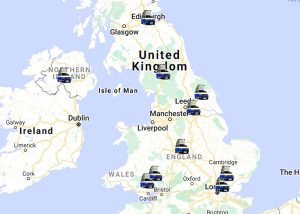
This fantastic download includes information on iconic British locations such as Durdle Door on the Jurassic Coast, Glastonbury in Somerset and the Isle of Skye to the Northwest of Scotland.

Along with a few lesser known favourites such as Llyn Gwynant in spectacular Snowdonia and Mundesley on the Norfolk Coast there is enough inspiration here for everyone.

Click here to download and explore this guide and plan your next campervan adventure!


USED VANS FOR SALE

Used Vans For Sale

ACCESSORIES MARKET

Accessories Market

CAMPERVAN HIRE

Safeguard Insurance

Classifieds

Advertise With Us

Snow place like home – Christmas in a VW California

Snow place like home – Christmas in a VW California

According to a survey carried out by Bassetts Vitamins, families are spending less and less time together – with 43% struggling to find time to eat as one – all of which means Christmas dinner may be one of the only occasions where everyone sits around the same table.

Of course, this was pre-pandemic, before working from home was at the same level it is now — but with our heads stuck in zoom calls and computers, it doesn’t mean the same does not apply.

So, we’ve revisited this article again to encourage families to spend quality time this Christmas, to remind of us the year when Volkswagen Commercial Vehicles challenged chef and founder of the 5 O’Clock Apron blog, Claire Thomson, to go off-grid in the New Forest with her family to create a festive feast in a Volkswagen California Ocean Campervan.

Kate Thompson, mother of two and Head of Press and Public Relations, of Volkswagen Commercial Vehicles, said: “While for many the Christmas meal is daunting enough in a fully equipped kitchen at home, Claire proved the iconic campervan is all you need to cook up a delicious three course meal.”

Claire and her husband – former Michelin starred chef, Matt Williamson – made use of the two gas hobs, fridge, and running tap that all come as standard in the California Ocean. The couple also propped up the preparation table and rotated the two front seats to create a spacious kitchen area in which to prepare their festive feast.

Claire created the original recipes to ensure they included all the essentials so her family weren’t missing out on the true Christmas experience. For a starter, Claire cooked pan fried scallops with hazelnut butter and spinach.

This was followed by a main course of turkey saltimbocca, served with sautéed potatoes, chestnuts and sprouts and dressed with spiced pickled pears. For the final touch, they had Christmas pudding fried with Marsala butter for dessert.

Claire Thomson, commented: “We have stayed in a Volkswagen California before and absolutely loved it. The kids like sleeping ‘upstairs’, in the top bunk and it genuinely has everything you need to create any meal – even a Christmas dinner. The hobs, fridge and sink make everything really simple, leaving you free to enjoy the time away with your family.”


Blogger Claire Thomson and family; cooking up a Christmas Feast in a Volkswagen California Ocean campervan 


Click here for the full festive recipe

Starter

Scallops with Hazelnut Butter and Spinach

Ingredients – Serves 4

12x large scallops
Salt and freshly ground black pepper to taste
1 tsp. picked fresh thyme leaves
30g skinned hazelnuts, roughly chopped 40g butter
Finely grated zest and juice of 1⁄2 lemon
100g washed baby spinach
Vegetable oil to cook

Method

  1. Heat a large frying pan over a high temperature and add about 1 tbsp. of oil. Season the scallops well with salt and pepper and carefully place in the hot pan
  2. Cook for 1 – 2 minutes until nicely seared on one side and then turn the scallops over. Add the butter and the thyme leaves and cook for further 1 – 2 minutes, carefully spooning the foaming butter over the scallops as they cook
  3. Add the spinach to the pan along with the hazelnuts and lemon zest
  4. Remove from the heat and serve immediately together with all the pan juices


Main Course

Turkey Saltimbocca

Ingredients – Serves 4

4x 150g turkey escalopes
8x slices of prosciutto (Parma ham would be preferred)
8x sage leaves
200ml dry Marsala wine (optional)
2 tbsp. plain flour
2 tbsp. olive oil
3 tbsp. unsalted butter
Salt and freshly ground black pepper, to taste
2x cloves garlic, peeled and slightly flattened with the side of a knife

Method

  1. Flatten the turkey escalope out between cling film (or greaseproof paper) to about 1⁄2 cm, using a meat mallet or a rolling pin. Cut each piece into two and place a sage leaf on each, together with a good grind of pepper. Wrap each piece of turkey in a prosciutto slice and dust lightly in flour.
  2. Heat the oil and butter in a large frying pan over a medium heat. Add the garlic and allow it to just begin to sizzle. Add the meat and cook for about 2 minutes on each side until crisp, golden and cooked through. Remove and keep warm on a serving dish.
  3. Add the Marsala to the pan and bubble it over a high heat until thickened and reduced by half. Taste for seasoning, remove the garlic and serve with the sauce poured over the meat.
Devils on Horseback

Ingredients – Serves 4

12x dried prunes
6x rashers of streaky bacon

Method

  1. Wrap 2 prunes together in a length of bacon.
  2. Fry the bacon wrapped prunes in a pan with a spot of vegetable oil over a moderate heat seam side down to begin with. Fry for about 2 – 3 minutes, turning the parcels until the bacon is crisp all over.
  3. Remove from the pan and keep somewhere warm.
Sautéed Potatoes with Chestnuts & Brussels Sprouts

Ingredients – Serves 4

500g small new potatoes, skin on
1x small onion, finely chopped
10 – 15 brussels sprouts, thinly sliced or shaved Salt and freshly ground black pepper
10x approx. cooked and peeled chestnuts, grated 30g butter
2 tbsp. vegetable oil

Method

  1. Boil the potatoes in well-salted water for about 10 minutes until tender. Drain and cool on a large serving plate. When cool enough to handle, slice into 1cm coins.
  2. Fry the finely chopped onion in the vegetable oil over a moderate heat for about 5 minutes until soft and golden.
  3. Add the potatoes, turn up the heat and fry over a high temperature for about 8 – 10 minutes, at least until the potatoes begin to brown and crisp in places.
  4. Add the butter and brussels sprouts and cook for 1 – 2 minutes more just to soften the sprouts. Season with salt and pepper as necessary and sprinkle the chestnuts over to serve.

Spiced Pickled Pears


Ingredients – Makes 1 large jar

8x ripe pears, peeled, halved and cored
600ml white wine vinegar
300g caster sugar
A couple of thin slices of lemon
1x whole cinnamon quill
1x thick slice of fresh ginger
1x fresh bay leaf
1⁄2 tsp allspice berries
1⁄2 tsp black peppercorns
1 large glass jar – washed in warm water and heated in a moderately hot oven for about 5 minutes to sterilise.

Method

  1. Combine all ingredients (except the pears) with the spices in a pan (big enough to put the pears into) and simmer until the sugar has just dissolved.
  2. Put the pears into the pan and simmer for about 15 – 20 minutes until completely tender and slightly translucent.
  3. Layer the pears in the sterilised jar and pour over the hot vinegar mix including all the spices.
  4. Leave to mature for at least a week before eating.
  5. Stored well, these pears will keep for several months.


Dessert

Fried Christmas Pudding with Marsala Butter

Ingredients – Serves 4

60g butter
40g icing sugar
2 tbsp Marsala wine or use sweet sherry
400g approx. Christmas pudding, cut into 1cm slices Crème fraiche or thick double cream to serve

Method

  1. Cream the butter and icing sugar together until completely combined. Beat in the marsala, then place in the fridge for at least 30 minutes to set (do this ahead of time)
  2. Melt the masala butter in a large non-stick frying pan over medium heat until just bubbling. Add the Christmas pudding and cook for about 2 minutes on each side until golden and fragrant
  3. Place the fried Christmas pudding, together with all the buttery pan juices on a large plate and serve with a dollop of creme fraiche or cream

If you’re considering a Volkswagen California for your winter adventure then why not check out our featured hirers page to try before you buy, or even go straight to our dealership map to find your nearest California specialist.

USED VANS FOR SALE

Used Vans For Sale

ACCESSORIES MARKET

Accessories Market

CAMPERVAN HIRE

Safeguard Insurance

Classifieds

Advertise With Us

Selling a VW California Campervan

Selling a VW California Campervan

No matter how much we love our Volkswagen Californias, one day it will be time to say goodbye.

Yes, it’s true and nothing lasts forever — but before you rush to place that ad and move on to greater adventures (and maybe newer campervans), please take time to read our handy guide to selling your beloved California.

Remember, Volkswagen Californias are premium vehicles — they still fetch top money on the pre-loved market, but that doesn’t mean you should neglect the basics as this could make a signifiant difference to how much you fetch for your van and how fast it will sell.

You may also wish to check out our comprehensive buyers guide to see the recommendations we make for anyone purchasing a van. If you familiarise yourself with what people look for it will prepare you for any questions prospective buyers have, and give you a chance to correct or account for any problems before you and your vehicle part ways.

Please toggle through the sections below to view our recommendations:

1. The Big Clean

The first thing to do is to get your Volkswagen California into the best condition possible, and that means cleaning it both inside and out; maybe to a level not seen since you first bought it. While this seems an obvious step, it’s amazing how much we can miss when we get accustomed to day to day ownership.

  • Firstly, consider having a full professional valet as this will really do an amazing job on a vehicle. If you are intending to do it yourself then get some good quality vehicle shampoo and polish, and concentrate on the windows and wheels, and then the rest of the bodywork including the bumpers.
  • Look for tar spots, bugs and if there are any small scratches consider getting some T-cut (or similar compound) and applying some serious elbow grease. 
  • Drain off any waste water by turning the lever under the sink. Make sure there are no smells coming from the sink or cooking area.
  • Make sure the van is free from stains or other smells — including air-freshener smells as well as cooking, smoking and pet smells.
  • Check the seats, upper bed mattress, the shelf below the elevating bed, the space behind the rear seats, the blinds etc. and wash anything that isn’t clean. If you travel with pets take extra care to remove any dog hair etc.
  • Sweep out, vacuum and wipe inside all the drawers, cupboards and any other nooks and crannies. The compact nature of the California means a lot of places that may not get the same attention for general cleaning — use something like a paintbrush to sweep inside the seat rails, around the handbrake housing, under the seats, around the window frames, around the sink tap and so on.
  • Clear out any rubbish, clean the top loading fridge and remove any personal items that may still be inside. This can be difficult if you want to use your van while it’s for sale, but it will definitely make the van look more spacious.
  • Wipe and polish the dashboard, paying special attention to any ashtrays and cup holders as these are notorious for collecting dust.

2. Check Accessories and Extras

Do not assume any your personal modifications will add to your van’s appeal. Take a look at any extra hooks, towel holders, shelves, mirrors etc. and consider returning the California as close to its original specifications as possible.

  • Test everything electrical, the gas, the fridge and the hobs. Make sure everything is working properly and consider professional gas and electrical checks to be on the safe side.
  • It may be worth including a full gas bottle and filling the water tank in order to demonstrate the van’s camping functionality.
  • Update the software on the built in navigation system (if applicable).
  • Go through all the drawers, cupboards, tables, blinds and pockets and make sure the hinges and mechanisms work.
  • Check that you haven’t left anything behind. For example, sunglasses in the compartment above the mirror or personal items in the back of the seats.
  • Don’t forget to tighten the screws and bolts holding the deckchairs together.

3. Check the Paperwork

Before you sell your Volkswagen California you should really have a valid MOT Certificate — obviously this only applies to vehicles over three years old, but any older vehicles without a valid MOT will certainly raise eyebrows and drastically reduce the chance of a sale. This will also potentially limit your market to dealers who will take advantage of the unverifiable state of repair.
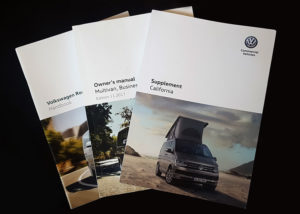
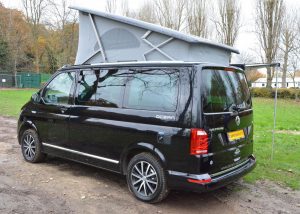
If you purchased your Volkswagen California brand new, then a stamped Service History book will show a well cared for vehicle and will make it a lot more desirable. From 2018 the service record is kept on a database with Volkswagen and they no longer issue vehicles with service books.

Of course, you will also need to have your vehicle registration document (V5C) to show details of the registered keeper. It is not a legal document of ownership, and as such it is also recommended to also have the original sales invoice if you can find it — this is not vital, but a good way of demonstrating authenticity.

As with selling any vehicle, you will need to complete the details of the new keeper and post this to the DVLA as soon as you can. The DVLA recommends not to buy any vehicle if the V5C isn’t available, so if you have lost it, it is important to apply for a replacement rather than expecting the new owner to do so.

If there is any Road Tax left on your vehicle, you can apply to the DVLA for a refund. As the old tax disc system is now obsolete, it is the responsibility of the purchaser to organise vehicle tax before driving away.

Along with legal documentation, also try to gather as much of the other paperwork you can find, including the Transporter Handbook and California Supplement — along with any instructions for accessories including trackers, bike racks and navigation equipment.

4. Value Your Van

Our Classified Ads section may give a rough guide to what you can expect your van to be worth, but we advise you to check out other sources too such as the motoring press, auction sites and franchised dealerships.

Be aware that some commercial sellers will list their price exclusive of VAT, something that may not apply to you.

While the Volkswagen California typically holds onto its value extremely well, a fully loaded van with every conceivable extra will not necessarily be as easy to sell at a significantly higher price. It will certainly be more desirable, but may fall outside of some people’s budgets who may not understand the reasons for the difference.

The same applies to customisations and additions that you may love but not necessarily to everyone else’s taste. For example, you might love your chrome trim, but it won’t sell so easily to anyone who prefers a more low key look.

This is a personal judgement call that only you can make, but some people will drop the price of their van in order to make a quicker sale; If you are prepared to be patient then go for a higher price at first and lower it gradually, bearing in mind that it’s impossible to negotiate a higher price once listed.

5. Decide where to sell

The quickest and most hassle free way to sell a Campervan is to part-exchange with a dealer in return for buying a newer vehicle. You are unlikely to get the same price as you would by selling privately, but because the sale and new vehicle purchase are completed simultaneously it will save you a great deal of time and energy, and if your California is under three years old you will find dealers much happier to do business with you.

While it can be tempting to accept the first offer, is always worth searching around different dealerships to ensure the best trade-in price as they often vary in their criteria.

An alternative to this is to sell your motorhome to a dealer only, without any part exchange. You will not get the best price unless your California is exceptionally low mileage and almost new, and as such it is even more important to get quotes from as many places as you can.

Selling privately requires investment, including your time and costs related to preparing it for sale. But the rewards can be the greatest, and not only will you get a higher price, you will still be able to use it while teaching for a buyer.

You can place an advert in your local paper or shop window but you may get fewer enquiries, so our recommendation is to use a specialist magazine or website offering classified ads services. If you place an advert in our own Classifieds Section we will also promote your advert via social media (Facebook and Twitter) in order to ensure maximum exposure.

Placing an advert on a popular auction or classifieds website can be cheaper or even free, but your van may end up lost in a crowd and you will potentially be inundated with questions from non-serious buyers.

Of course, it goes without saying to always be careful when selling privately and don’t part with any keys for any reason until the money is safely in your account.

6. Showing Your Van

Treat with extreme caution any offer to buy the van without seeing it first or anyone who asks you to meet them in an unusual location or wants to have a courier collect it. These are common signs of a scam and not worth the risks involved.
Therefore we suggest that you never agree to meet anyone in an unknown or potentially unsafe location; always meet at your home or place of work, preferably when other people are around. Also, never hand over any keys, instead unlock the doors and start the engine for them, If someone wants to take it out for a test drive, ensure they have insurance to cover them, and also go along for the ride. Make sure that you have your mobile phone with you.

Take time to show that everything is in working order and to explain the operation of the van — if it’s a cold day we recommend putting the heating on before any potential purchaser arrives for their viewing.

There is a lot to learn with these vehicles and our recommendation is to start with the cockpit, elevate the roof and then move to the rear, explaining all the functions a concisely as you go. Explain the importance of opening the windows when lowering the roof and the position of the seats when rotating them to face the rear.

When it comes to payment, the safest method is for the buyer to pay using a direct bank transfer. When the money arrives in your bank account, you can release the camper but do not do this before you are sure. Do not accept cheques, money services or the offer to pay via PayPal, unless the van was actually sold through eBay.

If you do choose to sell through eBay, then PayPal will offer buyer protection, but ensure this is done directly and not by ending the bidding early.

Even in this age of advanced technology, cash is still popular with many people. If you decide to take this option make sure you check each note before accepting them.

7. Legal Bits

As mentioned previously, any prospective customer is unlikely to want to buy your California without being able to take it for a test drive first. It is the responsibility of the keeper to check that the potential buyer has the correct insurance cover and licence beforehand:

  • The potential buyer can only drive a Campervan on your policy if it is covered for ‘any driver’, or if the potential purchaser has been added as a named driver.
  • The buyer may be able to drive your California on their own insurance policy, but this is likely to be 3rd party cover only.

We have also prepared a printable Van Preparation Checklist which you can download from here to use as a template when getting your van ready for sale.

USED VANS FOR SALE

Used Vans For Sale

ACCESSORIES MARKET

Accessories Market

CAMPERVAN HIRE

Safeguard Insurance

Classifieds

Advertise With Us
Buy A Used California
Carole Nash Insurance
VW California Dealerships

Why not in California?

Why not in California?

Despite its name, the Volkswagen California is sold throughout Europe but not in the U.S —  so why can’t you buy a California in California?

It’s a question we’ve been asked hundreds of times, and the answer is simply one of economics.

It’s now 30 years since Volkswagen firstly produce the California conversion of its Transporter range of panel vans.

It was developed jointly with camping conversion specialist Westfalia, initially based on the T3 / T25 Transporter. The T4 version followed in August 1990 and marked the change from a rear to front engine and front-wheel drive layout. This freed space at the back for the camping accoutrements and completely changed the campervan experience for many people.

We’re now in the 4the generation of Volkswagen California conversions, now based on the modern T6 Transporter and no longer produced by Westfalia after Volkswagen took over their Hanover production plant.

This year, as part of the 30 year anniversary, Volkswagen took a few of these iconic vehicles over to California, which gave us the opportunity to really explore the situation behind their unavailability in the USA.

Economics

Quite simply, if the California were to be made available in the USA it would cost upwards of $100,000, and that’s a of of money even if it is an exclusive brand. There is also the problem of cost. With the current exchange rates it would potentially hit the street at about $110,000 and with talk of big tariffs on imported cars, it could even go up, and that is a real shame.

Safety

Apparently they have not been through the American safety tests, although they do meet European standards – that doesn’t mean they are unsafe, it just means there would be a lot more testing to be done.


USED VANS FOR SALE

Used Vans For Sale

ACCESSORIES MARKET

Accessories Market

CAMPERVAN HIRE

Safeguard Insurance

Classifieds

Advertise With Us

Buying a Volkswagen California

Buying a Volkswagen California

The VW California in its many incarnations is undoubtedly a remarkable vehicle that will provide years of adventure and unparalleled fun. However, regardless of this there will still be things you need to be aware of when considering your purchase. This in-depth six part guide  and printable checklist will give you some basic advice for what to look for and what to avoid. Also, be sure to check out our Classified Ads section as you may find your next adventure on this very website.

  • Part one covers the elevating roof, water tanks and electrical hookup.
  • Part two includes the kitchen area and interior heating
  • Part three contains information on the lower living area and privacy blinds
  • Part four has information on outdoor camping equipment, including the sun canopy
  • Part five tells you about the tailgate storage, toolbox and includes an equipment inventory
  • Part six gives you a very brief overview of the technical side of the van, which is largely the same for buying any vehicle

Don’t forget to download our printable checklist by clicking here.

CALIFORNIA BUYERS GUIDE – PART 1

While it is always important to check the mechanical workings and history of any vehicle prior to purchase, for this guide we are focusing mostly on the unique fixtures and fittings associated with the live-in aspects of a Volkswagen California, especially those pertinent to the UK market.

THE ELEVATING ROOF

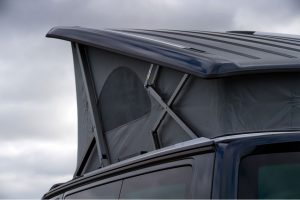
For the electric roof found on the California SE and Ocean, check the buttons and operation of the overhead control panel used to lift the roof, this should operate with the ignition turned on, but there should be no need for the engine to be running. There is an overhead blind that covers the roof bellows for driving; this should slide back and forth smoothly on its runners and stay closed when driving, although from time to time it is not uncommon for this to slide open a few centimetres and require closing again.

For the manual roof found on the Beach (and Coast in the rest of Europe), check that all the clasps and closing mechanisms work and that the roof lifts easily. As with all manual roofs it is possible to snag the bellows with the clips so you may find small holes where where the material has been caught, Also check the spines that stitched in to the bellow fabric as these too can be bent or deformed from poor observation when closing the roof.

Check that the roof lifts smoothly and evenly on both sides; we would suggest checking this more than once.

Check that the roof is in alignment when raised, and look for any signs of damage on the canvas, especially behind the metal “scissor” mechanism at the rear sides of the pop top.

There is an area; a type of band or spine that naturally folds inwards when the roof is lowered, and if the canvas has been caught this is usually the place where damage occurs. This is the result of user error and failure to observe the roof bellows closing inwards especially in windy conditions. This is not uncommon, so if there is any damage assess whether you can live with it or not; the damage is usually minimal in this section and only usually affects the outside.

Please note that there are three layers to this section – the outer canvas, the inner plastic band and the inner canvas and it can be patched successfully. If the canvas is caught in other areas then this might be more of a problem and can be used to negotiate a discount.

Check the front band has not been caught, rhus causing a bend low down on the band. If it has this is not a major problem but it may cause the canvas to pop out when closing and require the operator to be more vigilant with guiding the canvas inward.

Check around the join between the canvas and the roof cap to ensure it is not coming away at all, some T6’s have been repaired under warranty for this.

When the roof is open check that the top has not been damaged by racks or surf boards etc. and there are no signs that is has be driven or erected under low hanging branch, barrier or similar.

Look down the profile of the roof sides to check for any kinks or bends. A small kink can indicate the canvas has been trapped regardless of whether damage has been done to the canvas or not. It could also be that someone has closed the roof with bedding or objects still in the top. Most people are happy to live with a small amount of kinking, so it is up to you to decide if this is an issue or whether it has been reflected in the purchase price.

There is a flexible light pole inside the pop top of the T5; Check that it is not loose or broken, that the fixtures are sturdy and the housing on the light are complete. If the halogen reading light has been accidentally left on while the roof closed this could have damaged the clear plastic cover, which can fall out as a result. This is a minor issue but replacing the stem requires a some wiring and could mean upgrading  to the new T5 5 LED light (available to buy online). Fortunately the T6 avoids the stalk light completely with the introduction of LED dimmable comfort lighting integrated into the roof.

WATER TANKS AND ELECTRICAL HOOK UP

Check the electric hook-up point. Check that the flap opens and closes and there is no damage to the connection or panel – for example by driving off while connected to the mains (there is a warning alarm should you accidentally do this). If you get the chance to connect it up, the overhead control panel (above the cab) will tell you whether the hook up is charging the batter by displaying a two pronged – continental plug symbol bottom right. Incidentally a ‘G’ symbol means charging when you are driving.

There are two water tanks; one 30 litre tank for fresh water and one 30 litre waste tank for water collected from the sink.  There is a drain handle inside the bottom left of the cupboard — when in a vertical position the tank will hold waste water; when horizontal it will drain the waste tank from a pipe located underneath the bottom sill, near to the rear wheel.

Look for signs of leaking around the exterior of the vehicle. There is another red lever located under the shelf in the rear cupboard of the tailgate (above the gas bottle housing) that you release to drain the fresh water.

Allow some water to go down the plughole to ensure there is no blockage; the water will run out slowly.

Check the tap is secure, that there are no leaks and it works properly. Occasionally a micro switch or water pump could fail, especially if the vehicle has been subject to extreme freezing temperatures.

CALIFORNIA BUYERS GUIDE – PART 2

In this section of our California buyers guide we will be concentrating on the kitchen and food preparation area, along with the comfort of the rear heater.

KITCHEN, COOKER AND FRIDGE

Check that the ignition works on the cooker and there is no smell of gas.

There is a tap just below the hob to isolate the gas, and it should also be turned on and off at the gas bottle when driving (securely housed in the rear). If there is no gas bottle ensure all the fittings and regulators are there to install a new one.

Check that the fridge works – it is probably a good idea to turn it on when you arrive to ensure it has cooled down by the time you have looked around everything. The overhead display will indicate that the fridge is working by means of an illuminated snowflake icon

Check all fixtures and fittings, doors handles and hinges including those on the pull out table – note that shelf clips can go missing but they also cost pennies to replace. Best to just open all doors, drawers and cupboards. The small plastic washing up bowl can melt while cooking, so don’t forget to check this too.

INTERIOR HEATING

Operating the independent rear heating is done from the heads up control panel in much the same way as the fridge; there is an icon on the overhead display that illuminates when operational. The warm air is blown from a vent on the door column. There will be a slight smell of diesel on startup, but after this make sure there are no ongoing fumes in the vehicle and that the air is hot. Check that the remote fob to operate the heating is present and works.

HEADS UP DISPLAY AND CONTROL

If you have been following this guide in order, you should have already used this overhead control to operate the roof, the heating system and the fridge.

Having been show all of the features this should highlight any potential problems with unresponsive controls, dead pixels etc.

There is an icon on the left of the display to tell you how much water is in the tank – If the the tank is full check that it says so as there maybe a problem with the sender unit.

CALIFORNIA BUYERS GUIDE – PART 3

Continuing our guide to buying a Volkswagen California, in this section we will be focusing on the rotating captain seats and main living area.

CAPTAIN SEATS AND MAIN BED

Check the swivel seats in the front for any loose trim, this can drop a little and catch on the fixtures as it spins. if the seats have been turned incorrectly there may be scuffing in the door trims and seat columns as we will explain below.

The armrests on the driver and passenger seats should be checked in case someone has stood on them to get into the top bed.

The door cards on the front can become scuffed in the seats are turned without opening the door or badly positioned – a good tip is to locate the optimal position for swivelling the seat, and marking it with a sticker so that you can line it up in future with minimal fuss.

The bench seat at the rear is released by pulling up the lever to the right of the drawer. Check it slides freely and the stopper is in place to position it correctly.

Drop the headrests back via the button and ensure the pull-strap is not damaged. We would suggest if the vehicle does not have a sleep pack or mattress topper that you invest in one to give a more comfortable night.

There is a panel in the base, near the kitchen, that comes off to allow storage of long items like skis etc.

PLEASE NOTE. For the Beach with a third seat, we suggest you get a full demonstration of the operation as there is a specific sequence to use this correctly.

Also, for vans with three floor rails there is an option to put a fifth seat on board. You can not have this addition if there are only two rails so if you require a fifth seat then make sure you go for the three rail model.

WINDOWS AND BLINDS The privacy screens are nearly all different depending on the part of the van and the model year. Pull down all blinds to make sure they all stay down – it’s easy to miss if you don’t know where it is, but there is a small sideways running blind for the window next to the wardrobe. On UK T5 and Beach models, there is a pack of 3 blinds that covers the windscreen and front side windows, it should have a front blind and driver and passenger blind. On the T6 Ocean and older European models the windscreen has a built in blind that extends over the dashboard, and as such the pack will only contain blinds for the front side windows. Pay special attention to the blind above the sliding door as it can become accidentally bent from people climbing in and out and bashing their heads. Operate all windows to ensure they all open and close correctly – the rear windows operate by pinching the middle catch together.

CALIFORNIA BUYERS GUIDE – PART 4

In this, the fourth section of our VW California buyer’s guide we will spend some time looking at the provided tables, stowaway chairs and optional roll-out sun canopy.

TABLES

There are two tables with the California. The inner table, stowed next to the kitchen units and a larger removable table that fits into the sliding door. Check this moves freely, the leg is secure, look underneath especially at the rivets to ensure no weight has been applied to the table.

For the inner table there is an included strap that hooks around the head restraint to turn the kitchen area into an L shaped work surface – check that this is included. If it is missing a new table strap can be replaced relatively simply.

There is an outdoor table that is stowed in the sliding door. Check that the ledge it sits in is firm and has not been stepped on or scuffed. Open the table to check that it has a levelling screw for uneven ground on one of the legs, and that the legs clip open and close smoothly.

TAILGATE STOWAWAY CHAIRS

In the tailgate there is a zipped compartment for stowing chairs. Check this holder that the chairs are there; check the zips and rings that hold the seats in place. Take the deck chairs out and open them and check for wear and make sure that all the bolts are in place and tight – these do work loose and so we recommend you tighten every once in a while.

ROLL-OUT SUN CANOPY

If included, check that the winder and pegs are with the vehicle. Unwind about 45cm and bring the legs down for support. Then wind the canopy out to its full span. Check the legs and the fittings, check the canvas for stretching and tears.

See that everything winds out and in reasonably smoothly and that the legs lock into position. Check that the tent pegs are still in place, but if not they can be replaced relatively cheaply.

When winding out the canopy the handle and legs can knock against the bodywork – be careful when doing this by positioning your arm between the bodywork and the handle – and check for scuffs and dents that you might not otherwise notice.

CALIFORNIA BUYERS GUIDE – PART 5

In this, the fifth section of our VW California buyer’s guide we will focus on the positioning of the toolbox and the shower sometimes found below the rear parcel shelf. We also include a checklist of included and optional camping / comfort equipment.

REAR PARCEL SHELF AND BOOT AREA

Chances are that there will be a degree of wear and tear around the boot area – make sure that this is at an acceptable level. Check that the parcel shelf / bed frame can be removed and moved up to or down to the next level as the fixtures for this can suffer a few knocks.

One thing to be aware of is that the rear cupboard shutters can sometimes split, and while they may sometimes be repaired under warranty, this may not be available for all vehicles.

Whilst in the back you should also check the mattress for any signs of damage, and also (depending on options) check that the rear shower is present and working.

Fitted to the rear bench / bed and accessed from the bottom rear is the toolbox. Check the contents for Jack, Screwdriver, Centre Cap remover, Wheel brace and locking wheel nut key. Depending on options there is also a shower attachment stored under the shelf above the gas bottle – check that this fits into its bayonet mount correctly, switches on and operates properly.  

ITEM CHECKLIST

Other items you may have with the vehicle as standard (depending on options).

  • Two sets of Keys
  • Remote Heating Fob
  • Water Cap Key
  • Handbook/Roadside Assistance Book/ Service Book
  • Cutlery Insert
  • Emergency Roof Strap
  • Table strap
  • Plastic sink bowl
  • Sink Plug
  • Fridge Basket
  • EU hook up Lead
  • Sun Canopy Winder
  • Four Tent Pegs
  • Curtain/Blind Pack
  • Mosquito Mesh for Sliding Window
  • Rear Mattress
  • Top Bed Mattress
  • Top Bed Safety Net
  • First Aid Kit
  • Warning Triangle
  • Gas Fittings
  • Toolkit
  • Locking wheel nut

There maybe other extras sold with the vehicle that are not listed above, and you can always download our multi-point checklist that is linked above.

We would recommend going to your main dealer or a big Camping and Caravanning Show to check out a new California to see what the vehicle entails and whether it suits your needs, and to use this demonstration as your guide to inspecting a used vehicle.

One of the best ways to get to know a campervan is to hire first; a test drive and demo won’t let you get a feel for what it would be like to live in a 5m by 2m box for any extended period. If you do choose to hire, then we highly recommend you read our article on choosing a hire company.

CALIFORNIA BUYERS GUIDE – PART 6

While it is always important to check the mechanical workings and history of any vehicle prior to purchase, for this guide we have focused mostly on the unique fixtures and fittings associated with the live-in aspects of a Volkswagen California; this final addendum gives a brief overview of what to look for mechanically when buying second hand.

ENGINE AND MECHANICAL

There really is no reason to buy a T5 or T6 California without a full service history. People love these vans and tend to keep them serviced and looked after for many years. If there are missing stamps in the book then this may be evidence of neglect at some point.

The T5 and T6s are very resistant to rot, even around common areas. If it shows signs of rust then do not be scared to walk away, even if the vehicle is relatively new — there will always be other vans to choose from.

There have been some reports of bubbling paint around the perimeter of the elevating roof, and although VW agreed to repair vans up to 6 years old under their warranty, this rare issue is something you should check for on the off chance it was missed.

Listen out for any vibrations when it’s running a T5 as the dual mass flywheel is prone to failing; do not worry so much about vibrations from the camping interior as this typically contains a lot of equipment. The steering column in the T5 has also been reported to knock – this does not affect all T5 vans, but beware when buying an older second hand model.

There have been reports of problems with the older bi-turbo engines – apparently there has been an oil pressure issue with this engine, that is also sometimes evidenced by a loud knocking noise.

As with all vehicles, everything will be subject to wear and tear, and there may be issues we have missed through oversight or changes to spec. As such it is always best to have a suitably qualified professional with you when going to view any potential purchase.

USED VANS FOR SALE

Used Vans For Sale

ACCESSORIES MARKET

Accessories Market

CAMPERVAN HIRE

Safeguard Insurance

Classifieds

Advertise With Us

Receive our updates!

Keep informed of events, news and happenings within our community by signing up to our mailing list. We adhere to a strict Privacy Policy to protect you from spam and you can opt out at any time. So if you’d like to stay informed with what’s going on, then please fill in your details and subscribe.

You have Successfully Subscribed!